Recent Posts
Looking Past the Crowd: David in Florence, the Basque Museum, Beach Photographers, a Woman with Binoculars and a New York Mall
Some pictures work because of what’s in them. Others work because of what’s around them. Crowds, weather, architecture, and the simple act of waiting all shape the frame. These five images, pulled at random from the Pixel Effects feed, each deal with a different kind of surrounding noise.
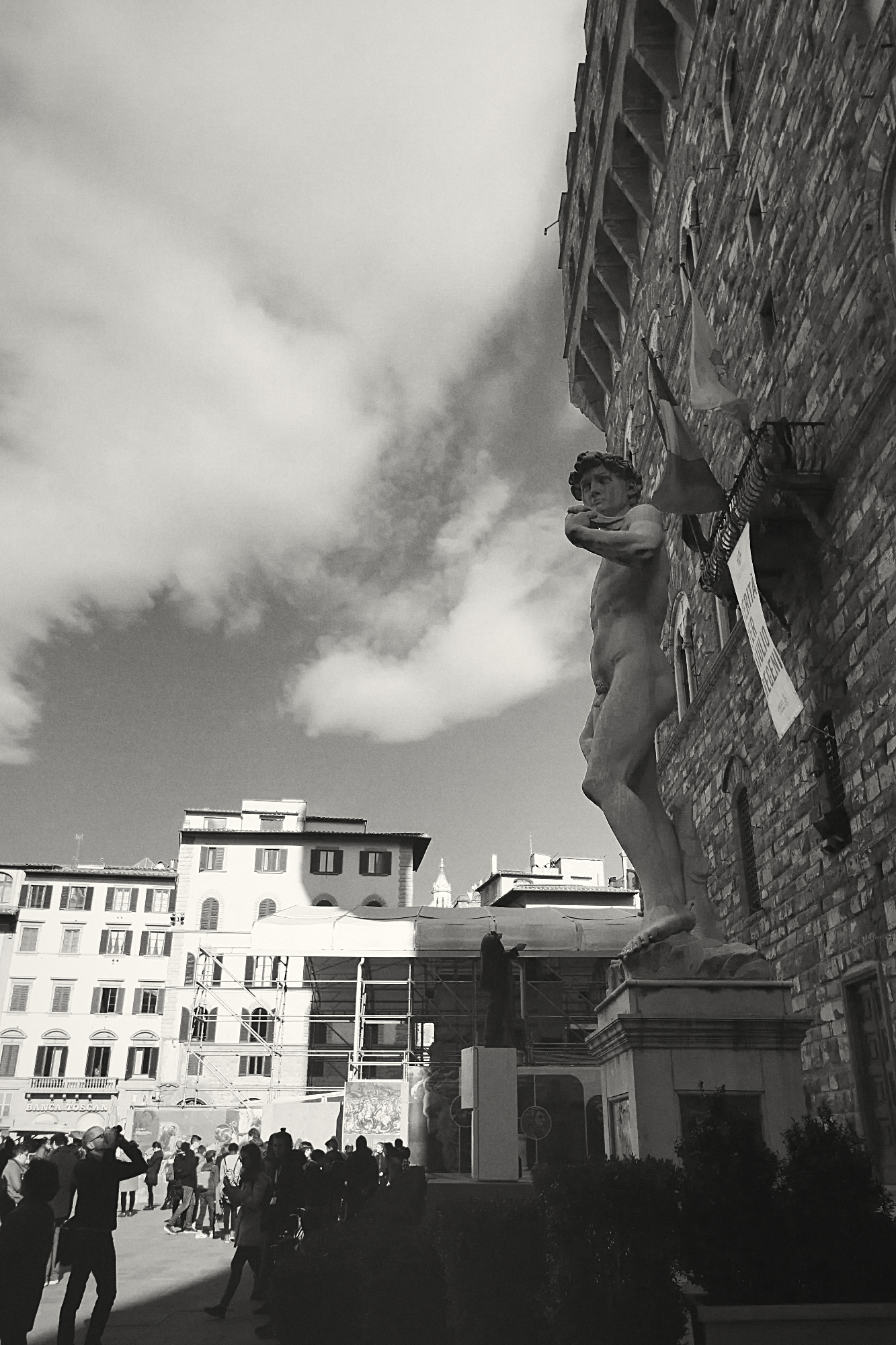
David, Florence
The copy of Michelangelo’s David that stands in Piazza della Signoria is never alone. Tourists, scaffolding, and the heavy stone of the Palazzo Vecchio all compete for attention. Shooting in black and white strips away the competing colors and leaves the statue’s gesture clean against the sky.

Photographing Through Obstacles: Museum Armor, Aquarium Glass, Vienna's Plankengasse, the Holy Sepulchre and Wrocław at Night
Most of the photos I like best weren’t taken in clean conditions. There’s almost always something between me and the subject: a pane of museum glass, a tank of water, a dark street, a church lit by a few oil lamps. These five pictures all have that problem in common, and each one got solved a slightly different way.
Armor Behind Museum Glass
Armor is a gift to photograph. Polished plate throws light back in long, clean highlights, and the shape reads instantly even in a small frame. The glass is the enemy. Stand back and you get the room, the ceiling lights and yourself reflected across the steel.
The Places That Keep Moving While We Stand Still
Some places never stop working. Clocks turn, ships load, tourists lean over walls, canals reflect the same lights night after night. We arrive, look, and leave. The places themselves keep going.
These five images, chosen at random, all show systems that outlast any single visitor.
The Clock That Has Outlived Its Makers
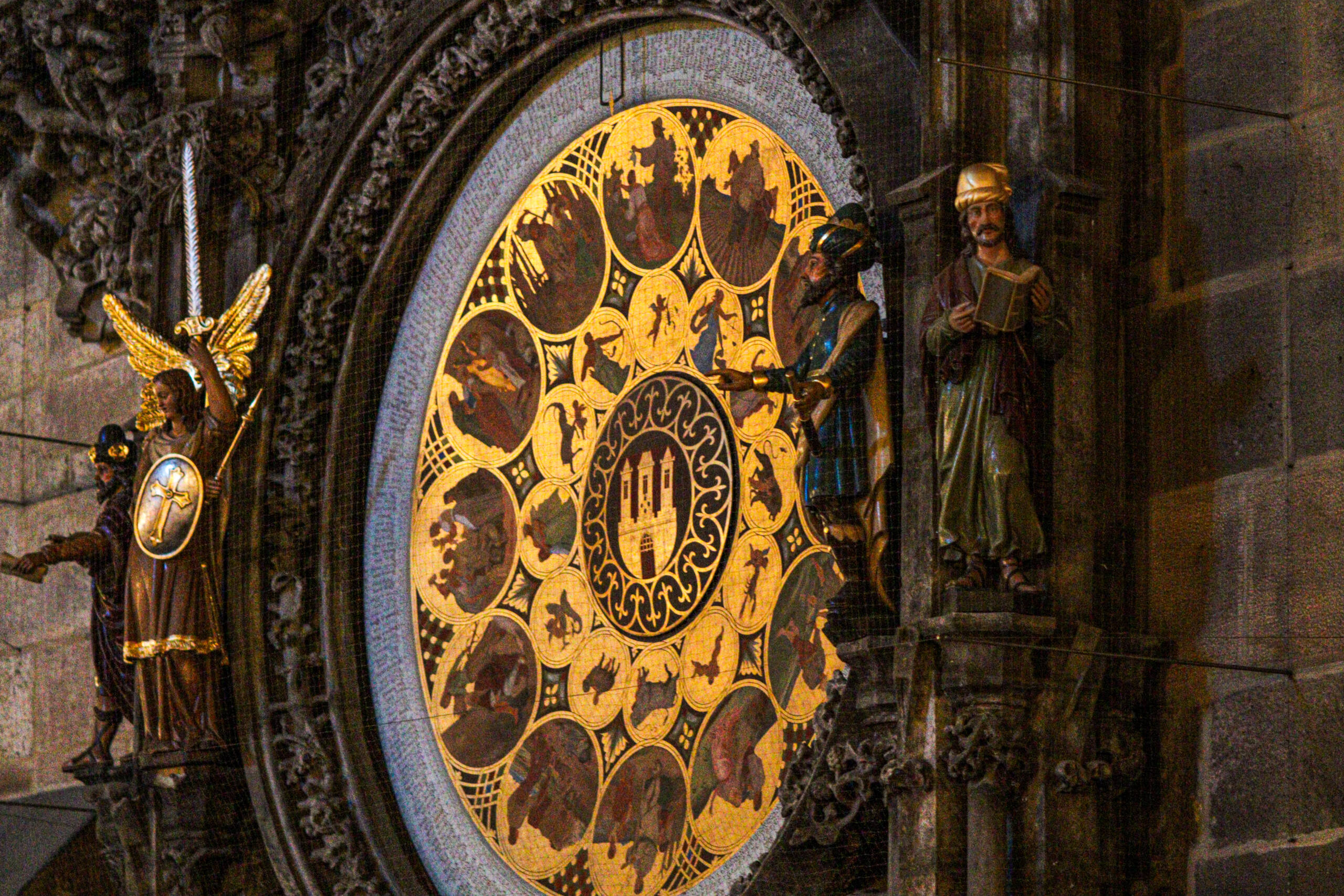
The calendar dial of Prague’s astronomical clock is a machine that still believes in the old order of the sky. Golden medallions, zodiac signs, and painted saints circle a central tower that has watched the same square for centuries. An angel holds a sword. A chronicler holds a book. Neither seems in a hurry.
Five Travel Moments, From Murano's Glass Furnaces to Wall Street's Bull
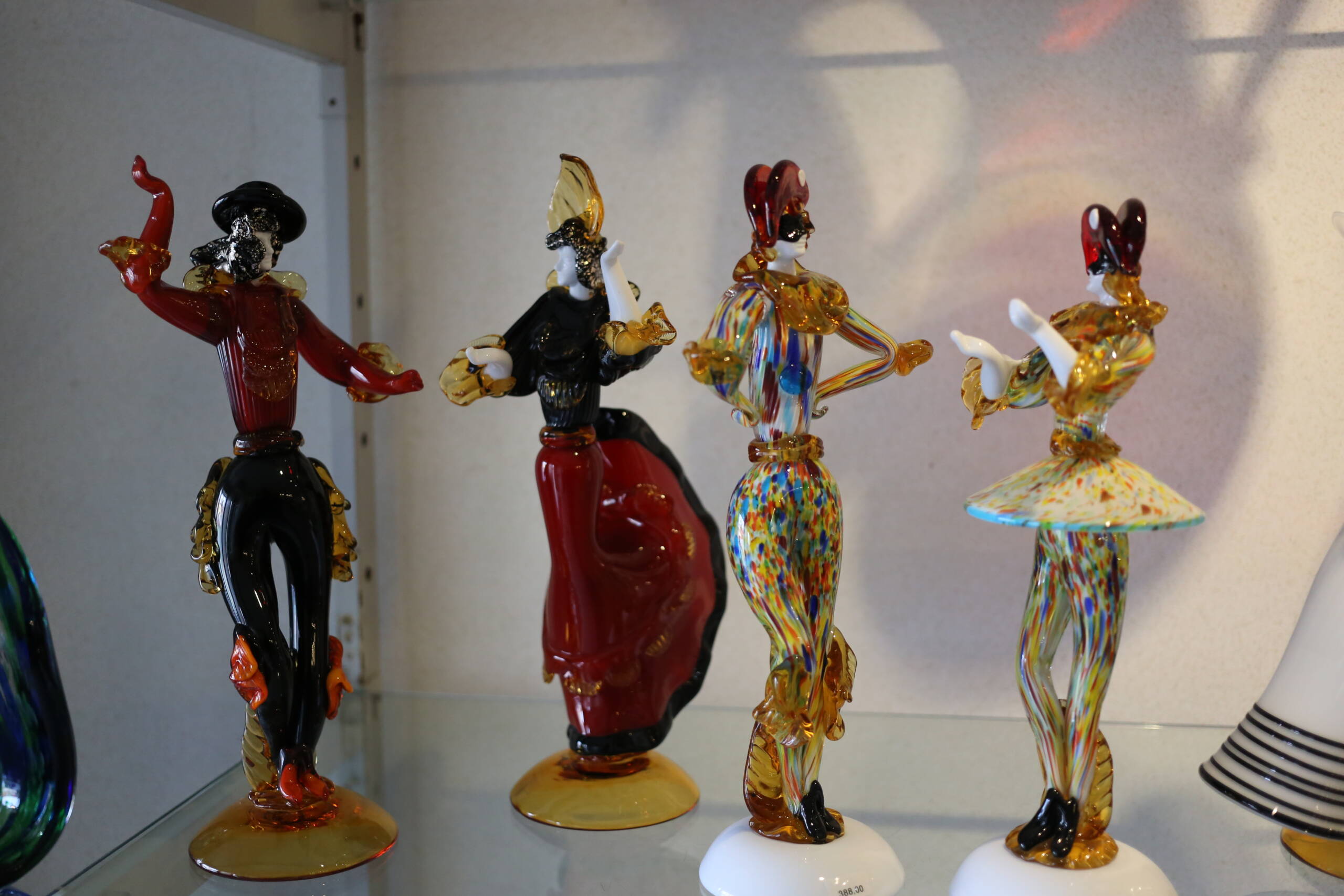
No theme this time. I pulled five images at random from the media library behind this site, years and continents mixed together, and decided to just write about whatever came up. The draw doubled up on one island without me choosing that. I left it as it landed. Two frames from the same afternoon on Murano, shot close enough together that they’re practically the same walk. That’s what happens when you let a random number generator pick your travel photos instead of your memory. Murano gets treated as a day trip from Venice, the vaporetto out, an hour among the glass shops, the vaporetto back. It deserves longer than that. The island runs on furnaces that have been lit for centuries, and the canals are quieter than anything in Venice proper because most of the crowd never gets past the showroom nearest the dock. Walk two streets back from the water and you lose the tour groups almost entirely.
AI Answers Are Eating My Search Traffic: Six Months of Watching the Line Go Down
Tuesday morning, coffee, analytics tab. Same ritual for years. Lately I open it the way you open a bill you already know the number on.
The shape of the drop is the interesting part. It wasn’t everything at once. It was specific pages, and once I sorted them properly, the pattern was almost embarrassing.
Everything that answered a question in one paragraph is gone. Definitions. “What is X.” “How many Y in Z.” Those posts used to bring steady, boring, reliable traffic for years. They now bring almost nothing, because the answer sits at the top of the results page and nobody needs to click through to a stranger’s website to read one sentence they already have.
Buying Vintage Lenses on eBay: Six Months of Notes, Mistakes and Keepers
Started this as a cheap way to get fast glass. Ended up with a small box of metal cylinders, a working knowledge of Russian aperture rings, and opinions.
Here’s what I learned paying for it.
Read the seller’s photos, not the seller’s words
“Clean glass” means nothing. Every listing says clean glass. What tells you something is the picture where the seller shines a light through the lens from the back. If they didn’t take that picture, ask for it. If they won’t, move on. There are eleven thousand of these things for sale.
Cheap Flights: What Actually Worked After a Year of Booking Badly
I kept a note on my phone every time I booked something this year, with the price, the date I booked, and how I felt about it afterwards. Twelve months of that is enough to see which of the folklore is real.
Short version: two things save real money and everything else is noise dressed up as strategy.
The two things
Being flexible about the day. Not the destination, not the month, just the day. Shifting a departure by forty eight hours in either direction changed the price more than anything else I tried, repeatedly, on almost every route. Tuesday and Wednesday departures were cheaper more often than not, but the pattern isn’t reliable enough to plan around. Just look at the whole month grid and pick the low one.
I Locked Myself Out of My Domain Registrar for Nine Hours: What Actually Got Me Back In
New phone. Transferred everything. Thought I’d transferred everything.
The authenticator app doesn’t move with a normal backup. I knew that. I knew it in the way you know things you’ve read once and filed under “later.” So at 9:40 in the morning I’m looking at a login screen asking for a six digit code from an app that no longer exists on any device I own.
Behind that login: a few hundred domains. Nameservers, renewals, transfer locks. All of it.
I Stopped Checking My Portfolio for a Week and Nothing Bad Happened
Not a discipline experiment. I just got busy, noticed on Thursday that I hadn’t opened the app since Sunday, and decided to see how long I could keep it going.
Answer: eleven days, and then I looked, and the number was a number.
The first two days were loud
I hadn’t understood how automatic the check had become. Kettle boiling, phone out. Standing in a queue, phone out. Waking at night, phone out. It’s not really about the money at that frequency. Nothing meaningful happens to a position in the ninety seconds between two glances. It’s a slot machine with a portfolio-shaped skin on it.
My Summer Electricity Bill Doubled: What Changed When I Stopped Switching the Air Conditioner Off
The bill arrived and I assumed a meter fault. It wasn’t a meter fault. It was August, and it was me, running a modern inverter unit the way you’d run a 1990s one.
So I spent a month testing things, with a cheap plug meter on the indoor unit and a note on the fridge. Here’s what moved the number and what didn’t.
Switching it off when I left the room was the expensive habit
This is the one that surprised me. An inverter compressor is designed to run continuously at low speed once the room is at temperature, and low speed draws very little. Every time I killed it and came back an hour later, the unit had to pull the room back down from scratch, which means running the compressor flat out. Flat out is where the consumption lives.