The Places That Keep Moving While We Stand Still
Some places never stop working. Clocks turn, ships load, tourists lean over walls, canals reflect the same lights night after night. We arrive, look, and leave. The places themselves keep going.
These five images, chosen at random, all show systems that outlast any single visitor.
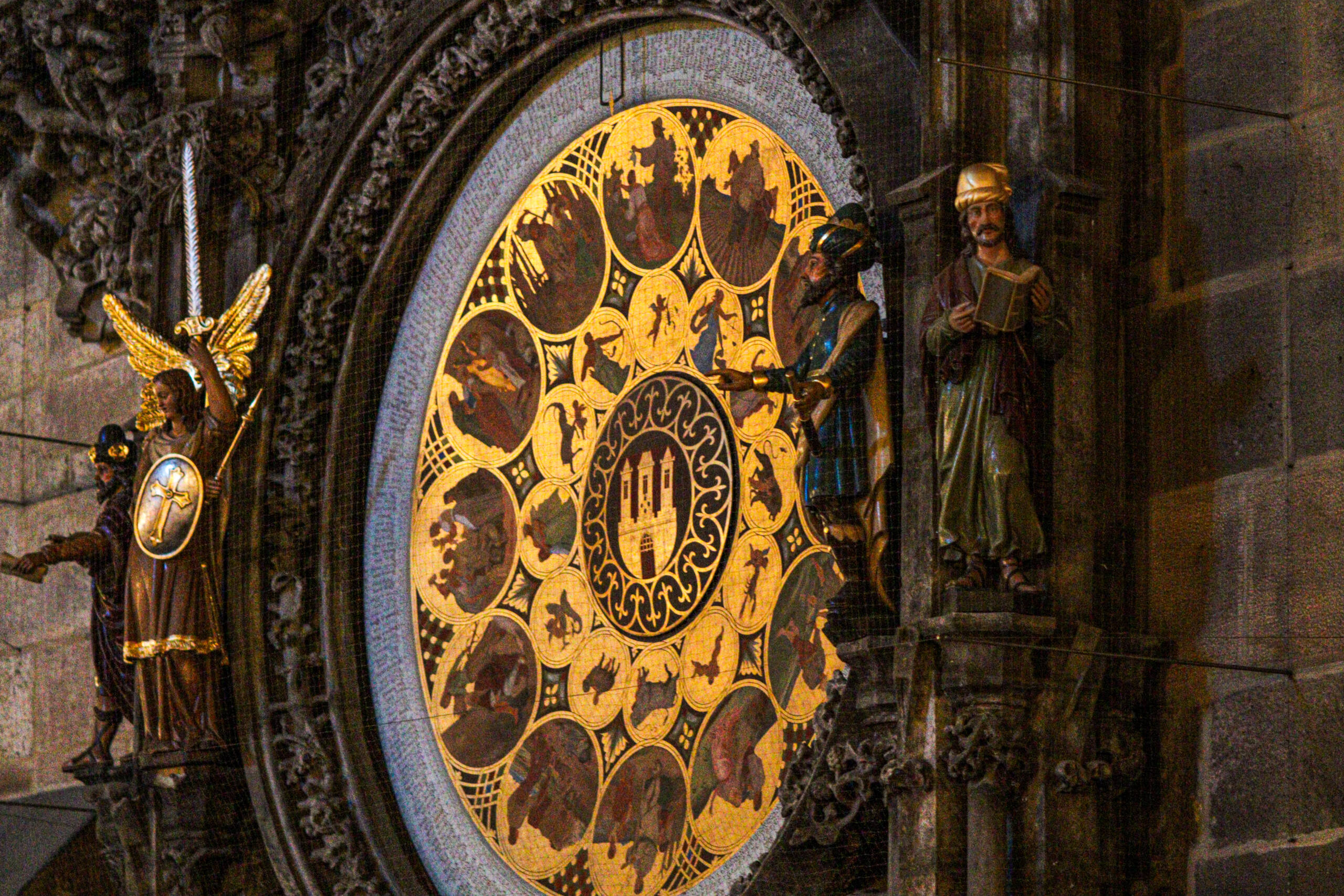
The Clock That Has Outlived Its Makers
The calendar dial of Prague’s astronomical clock is a machine that still believes in the old order of the sky. Golden medallions, zodiac signs, and painted saints circle a central tower that has watched the same square for centuries. An angel holds a sword. A chronicler holds a book. Neither seems in a hurry.
The clock does not care that most people below it are checking their phones. It keeps the older time: the one measured in months, seasons, and the slow turning of painted stars. You can stand in front of it for ten minutes and feel the difference between human time and mechanical patience.
Venice at Night, Hands Rising from the Water
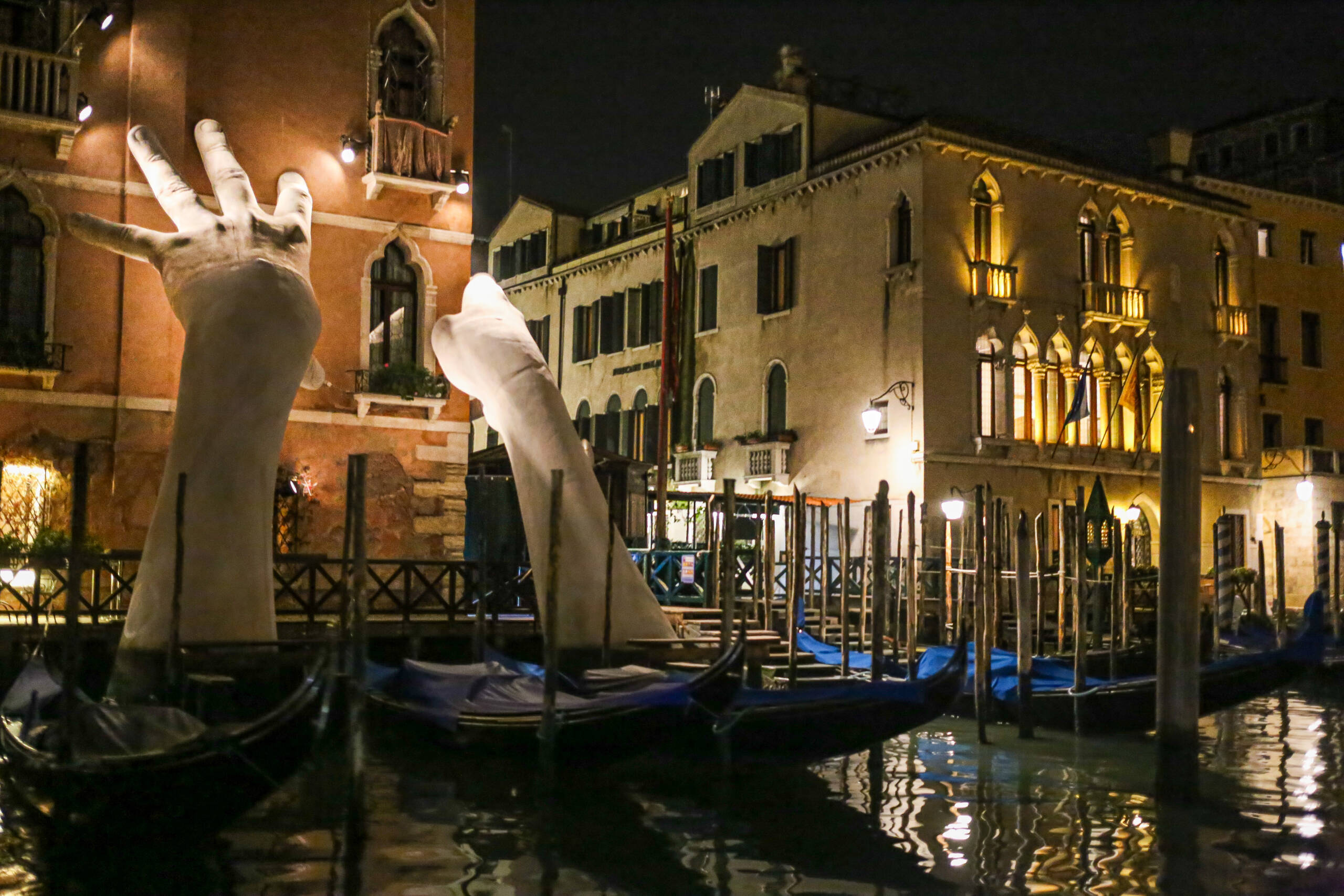
Two enormous white hands push up through the canal as if the city itself is trying to surface. Gondolas rest under blue covers. Streetlights warm the façades. The sculpture is temporary, but the canal is not. Venice has been staging this same late-night conversation between water and stone for longer than any installation will last.
The hands make the permanence of the city visible by interrupting it. For a few months the water has company. Then the hands will leave, and the canal will continue its quiet work of reflecting everything that looks into it.
Looking Out from Pena Palace
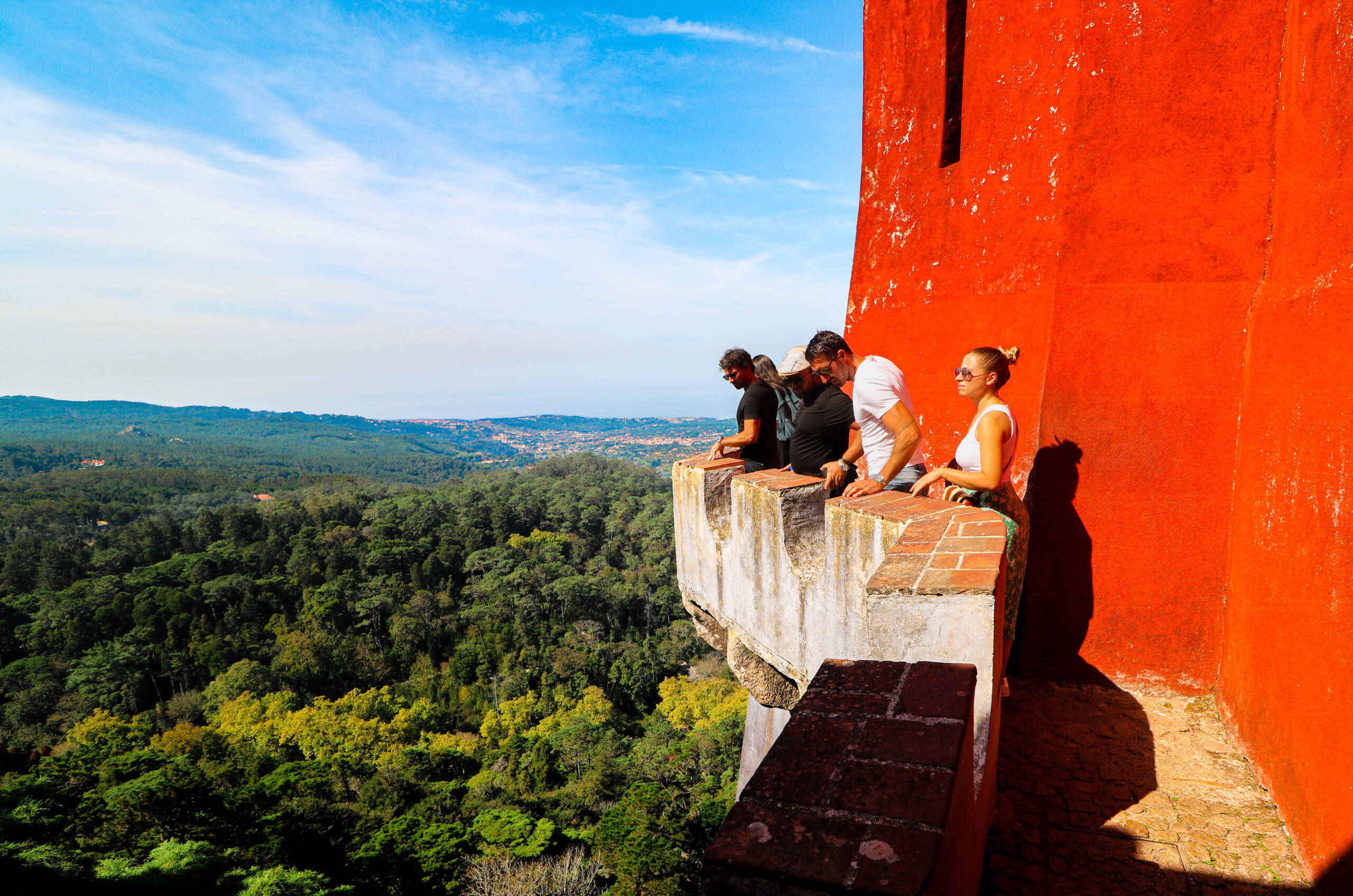
On the red terrace of Pena Palace in Sintra, a small group leans against the wall and looks toward the sea. The forest below is thick and green. The coast is a soft blue line in the distance. The palace wall is a hard, saturated red that refuses to blend with anything around it.
This is the classic traveler’s posture: standing still while the landscape keeps its own long rhythm. The forest grows. The tide moves. The people on the terrace will leave before either of those things changes in any noticeable way. The view is the same for every visitor who stops there, which is why it remains powerful.
A Quiet Afternoon in Vaxholm
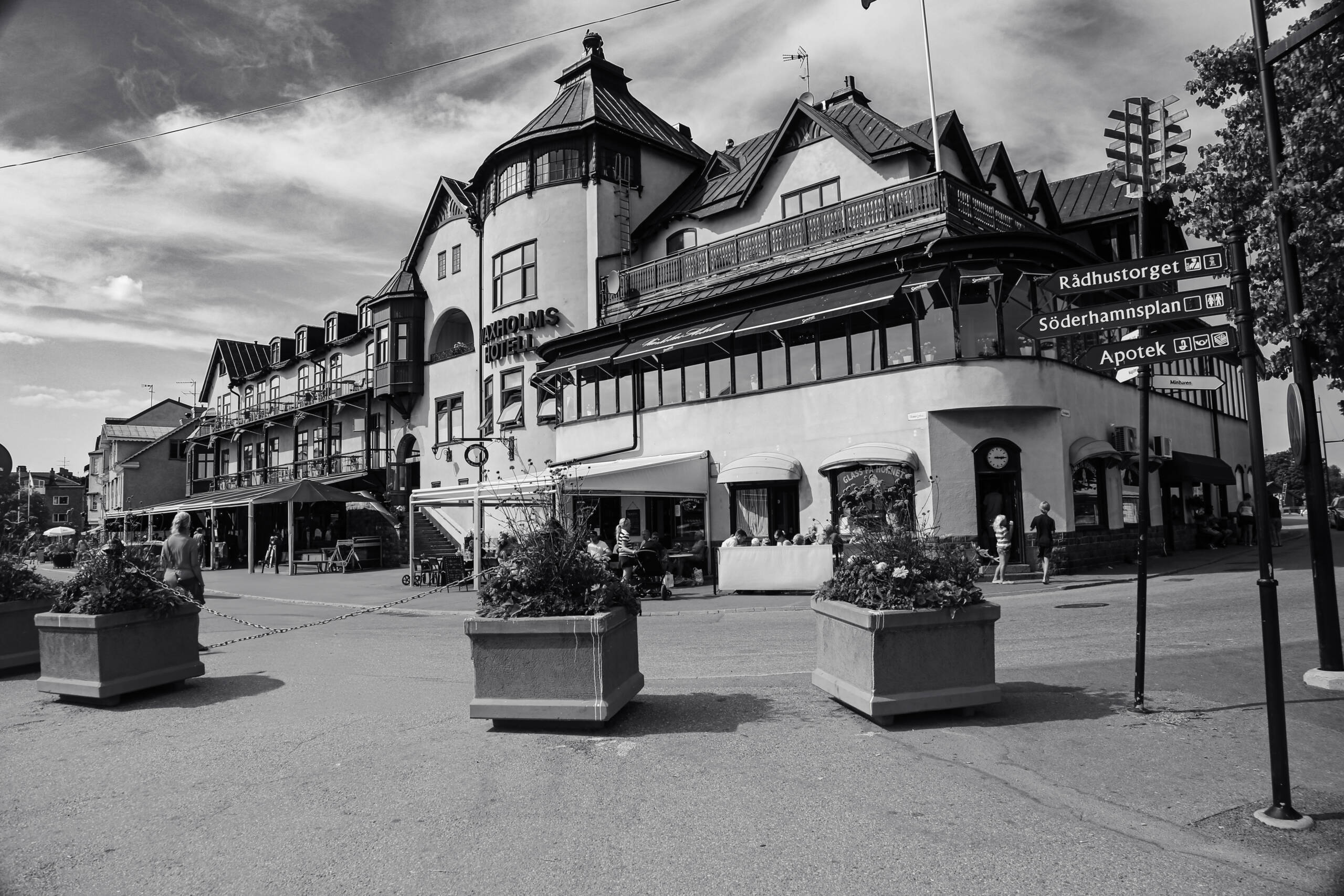
In black and white, the hotel in Vaxholm looks like it has always been there. Flower boxes, outdoor tables, street signs pointing to the pharmacy and the town square. People sit in the shade. A few walk past. Nothing urgent is happening.
Northern towns like this one measure time differently. The light changes more dramatically than the buildings do. The same hotel has watched summers and winters arrive and leave for generations. The photograph freezes one ordinary afternoon, but the place itself continues at the slower speed of seasons and ferry schedules.
The Ship That Never Stops Working
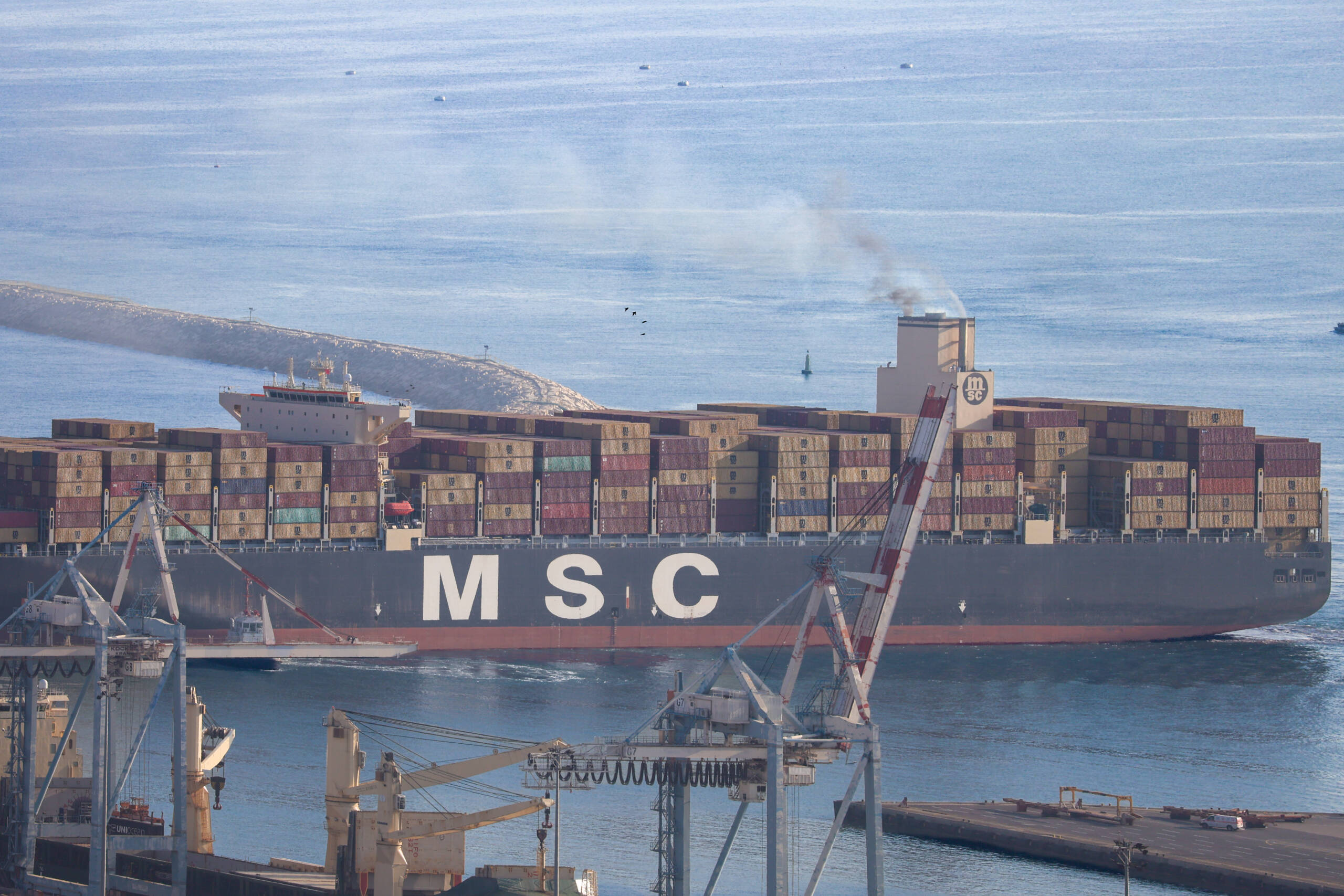
An MSC container ship sits low in the water, stacked high with color-coded boxes. Smoke drifts from the funnel. Cranes stand ready. The ship is both massive and temporary: it will leave this port, cross an ocean, and arrive somewhere else where the same process begins again.
Freight is the opposite of tourism. Tourists stop to look. Ships keep moving so that the things tourists buy can keep arriving. The photograph catches one brief moment of stillness in a system that almost never pauses. The containers will be somewhere else by the time most of us finish looking at the picture.
What Remains
Clocks, canals, terraces, quiet squares, and working ships all share the same quality: they outlast the people who pass through them. We arrive with cameras and limited time. They continue with their own longer schedules. The interesting part is not that we visit these places. It is that they keep operating whether we are there or not.