Trade Show Floor Photography: Isolating One Conversation in a Crowded Hall
An exhibition hall is a bad room to photograph in. The lighting is mixed, the backgrounds are visual noise, and the thing you actually want, which is people talking to each other about something they care about, lasts about four seconds before somebody looks up at the camera.
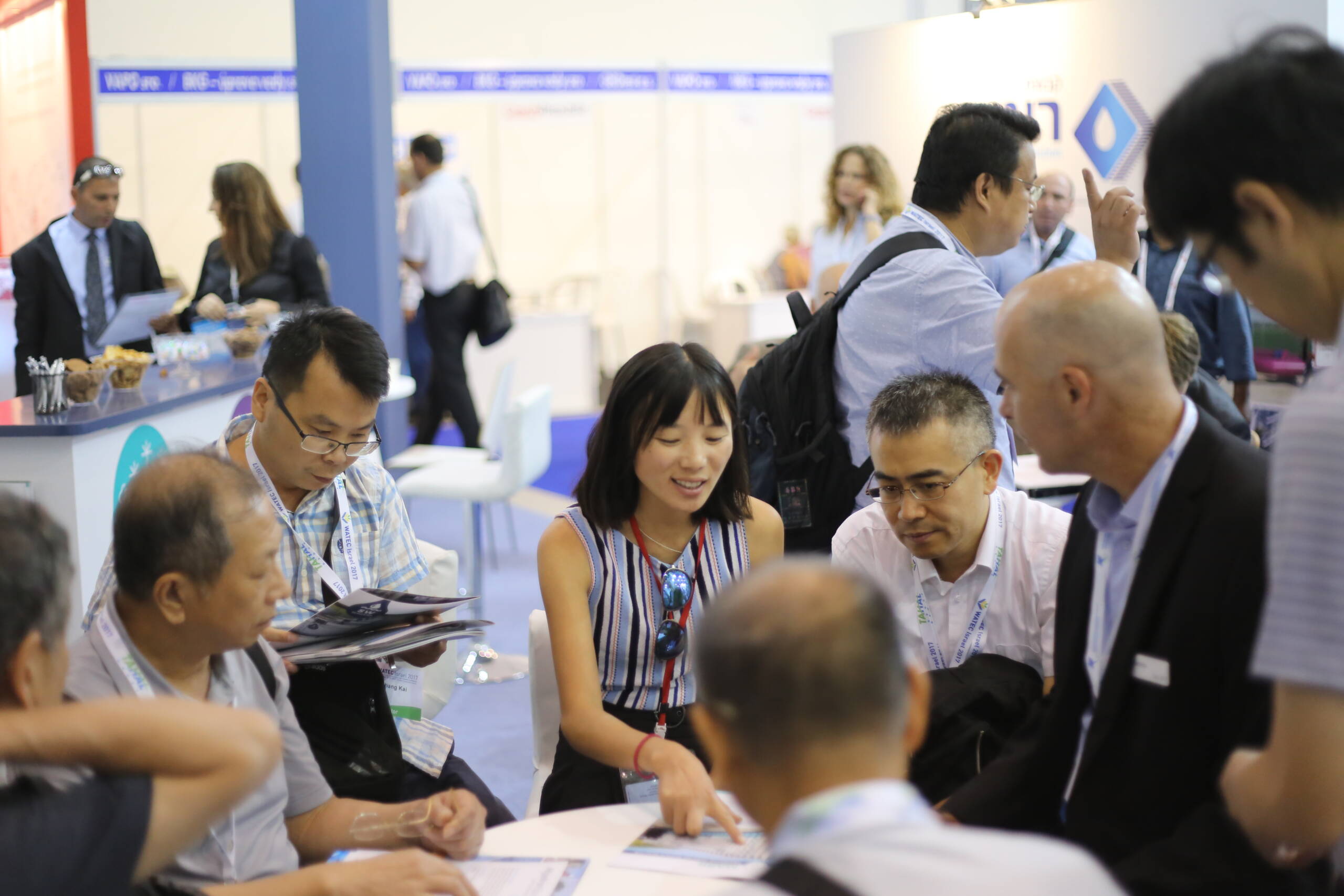
The frame above is a delegation working through printed material at a booth. Nobody posed. The useful part is the pointing hand and the two men reading, and everything else in the picture is there to say “trade show” and then get out of the way.
Long lens, wide open, no apologies
Shoot this at 85mm or longer and as close to wide open as your glass allows. Compression is doing two jobs. It pulls the group together so the conversation reads as a single unit, and it turns the booth graphics, the aisle carpet and the backs of forty strangers into soft blocks of blue and white. Stop down to f/8 and you get a documentary photo of a convention centre. Open up and you get a photo of a conversation.
Distance also keeps you out of the transaction. Standing two metres away with a wide lens makes everyone at the table performative. Standing six metres away with a 135 makes you furniture.
One face carries the frame
Groups of five or six almost never work as democratic compositions. Pick the person doing the active thing, the one gesturing or pointing or mid-sentence, and focus there. Everyone else becomes context. If you try to get every eye open and every face clean you will burn the moment and end up with a handshake shot.
Shoot in short bursts of three. Conversations have micro-peaks, and the peak is usually one frame before or after the one you reacted to.
Colour is the real problem
Halls run daylight from roof panels, overhead discharge lighting and whatever LED strip the booth builder chose that morning, all at once. Skin tones go green under the aisle lights and cyan under the booth. Shoot raw, and set white balance per booth rather than per event. A grey card is worth the ten seconds if you are going to be at one stand for a while.
Expect ISO 1600 to 3200. Exhibition halls read much brighter to the eye than they meter.
Let the clutter in at the edges
The instinct is to clear the frame. Resist it. A shoulder in the bottom corner, a back of a head, a lanyard cutting the edge, all of that sells the density of the room. A perfectly clean group at a table could have been shot in a hotel lobby.
Lanyards and badges are also free archival metadata. Years later, the event name on a strap is the only reason you know where the picture was taken.
Shoot the reading, not the handshake.