Below you will find pages that utilize the taxonomy term “Photography”
Posts
Looking Past the Crowd: David in Florence, the Basque Museum, Beach Photographers, a Woman with Binoculars and a New York Mall
Some pictures work because of what’s in them. Others work because of what’s around them. Crowds, weather, architecture, and the simple act of waiting all shape the frame. These five images, pulled at random from the Pixel Effects feed, each deal with a different kind of surrounding noise.
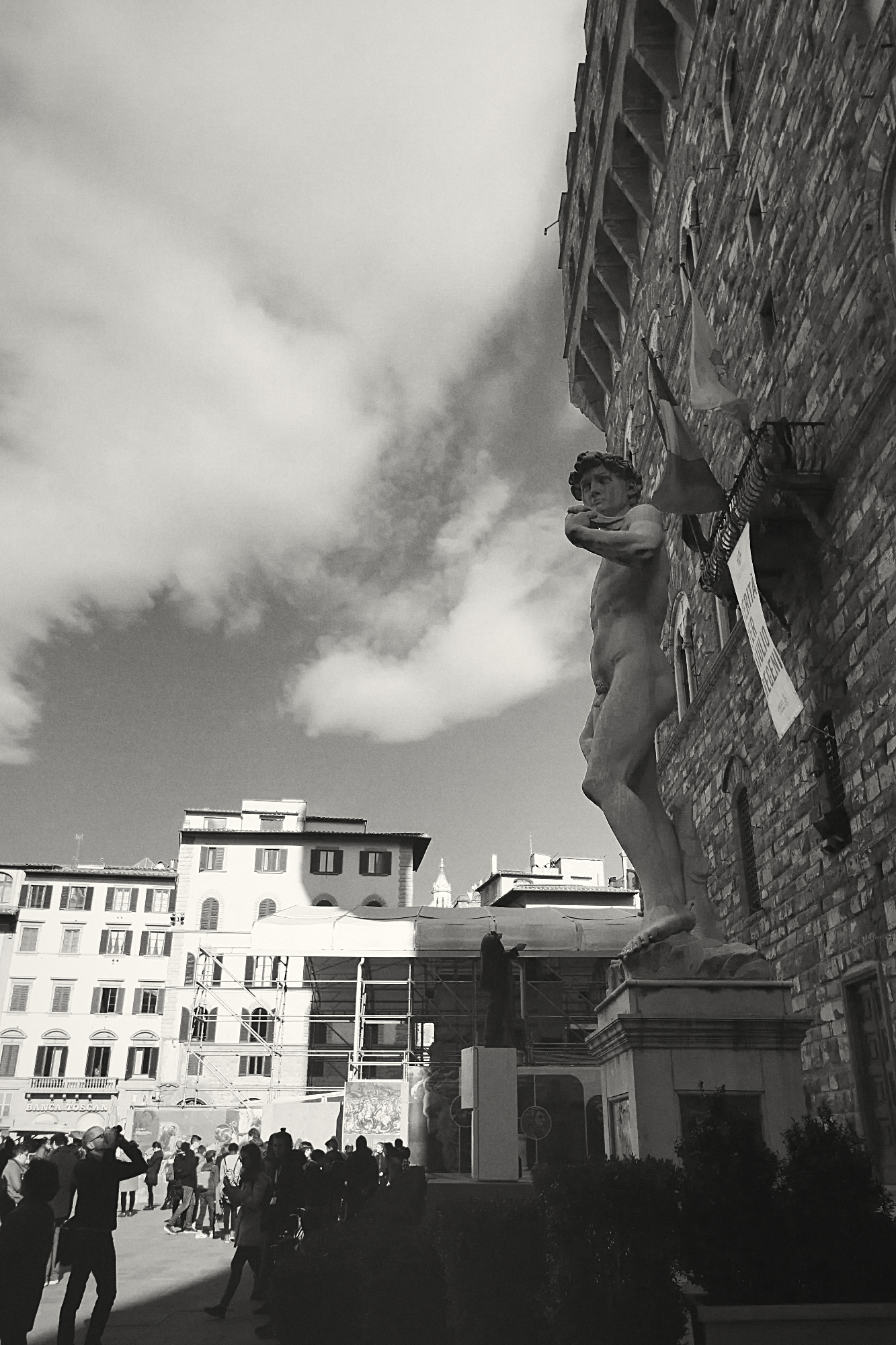
David, Florence
The copy of Michelangelo’s David that stands in Piazza della Signoria is never alone. Tourists, scaffolding, and the heavy stone of the Palazzo Vecchio all compete for attention. Shooting in black and white strips away the competing colors and leaves the statue’s gesture clean against the sky.
Posts
Photographing Through Obstacles: Museum Armor, Aquarium Glass, Vienna's Plankengasse, the Holy Sepulchre and Wrocław at Night
Most of the photos I like best weren’t taken in clean conditions. There’s almost always something between me and the subject: a pane of museum glass, a tank of water, a dark street, a church lit by a few oil lamps. These five pictures all have that problem in common, and each one got solved a slightly different way.
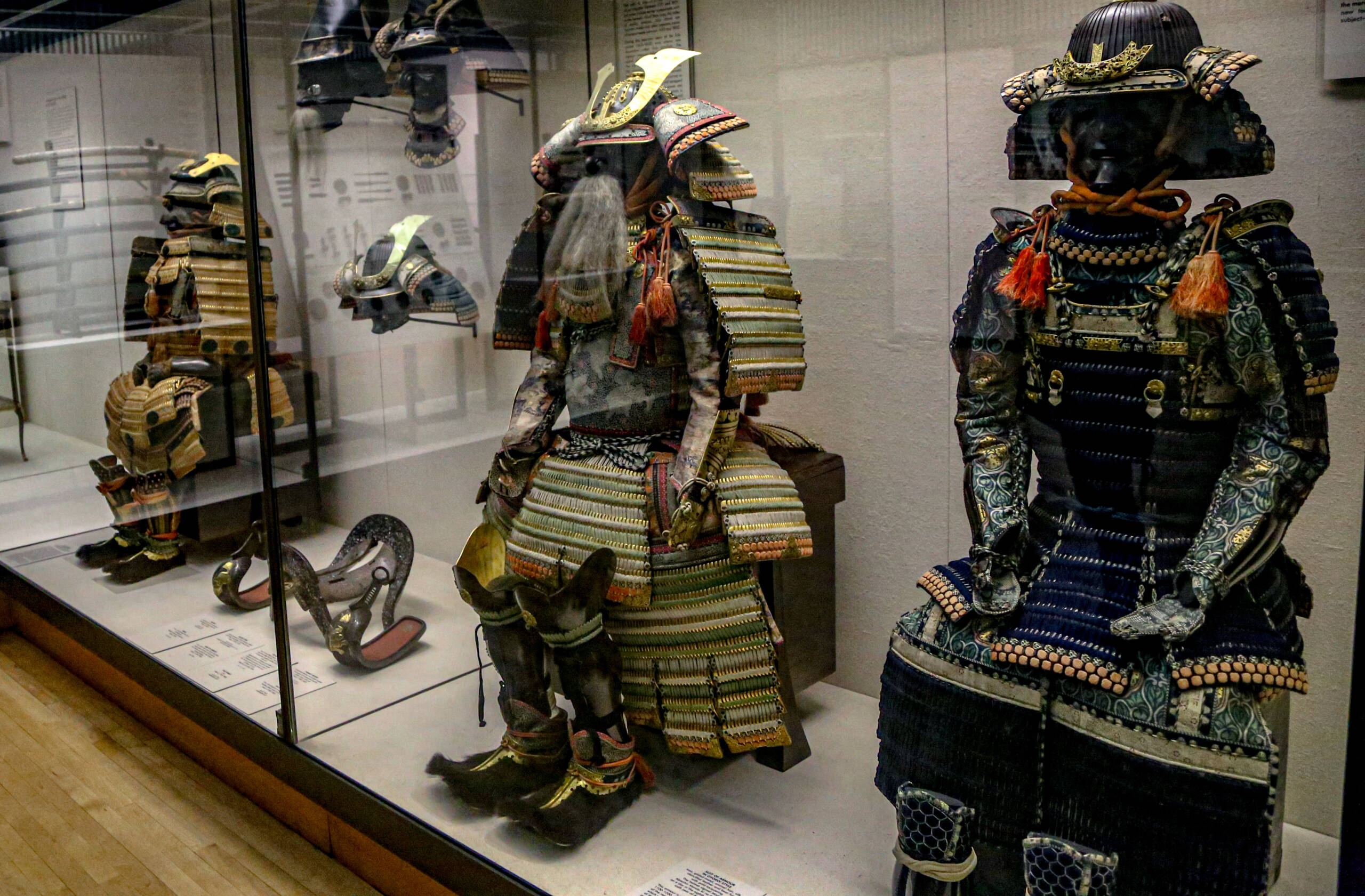
Armor Behind Museum Glass
Armor is a gift to photograph. Polished plate throws light back in long, clean highlights, and the shape reads instantly even in a small frame. The glass is the enemy. Stand back and you get the room, the ceiling lights and yourself reflected across the steel.
Posts
Trade Show Floor Photography: Isolating One Conversation in a Crowded Hall
An exhibition hall is a bad room to photograph in. The lighting is mixed, the backgrounds are visual noise, and the thing you actually want, which is people talking to each other about something they care about, lasts about four seconds before somebody looks up at the camera.
The frame above is a delegation working through printed material at a booth. Nobody posed. The useful part is the pointing hand and the two men reading, and everything else in the picture is there to say “trade show” and then get out of the way.
Posts
Contrails Over the Grand-Place: The One Part of Brussels Nobody Preserved
I went to Brussels to photograph a World Heritage site and came home with a picture of the sky. The Grand-Place is in the frame, barely. A sliver of the Town Hall on the left with its rank of statues on corbels, a run of gabled houses on the right, and between them a long grey wedge with two aircraft trails crossing it.
Everything below the rooflines is legally frozen. The square went onto the UNESCO list in 1998, and the protection is granular in the way heritage protection always is. Shopfront lettering, paint, the mortar you point the brick with, the colour of an awning. There is a whole apparatus of committees deciding what a facade is allowed to look like, and it applies to a strip of city about two hundred metres long.
Posts
The Camera You Brought
There’s a version of travel photography that involves light stands, permits, pre-dawn location scouting, and a pelican case full of glass. That’s not what this is. What this is — a woman moving along the marble terraces of the Bahá’í Gardens in Haifa, Sony mirrorless raised, backpack on, sunglasses pushed up into her hair because she forgot to take them off — is the other kind. The kind most people actually do. The kind that produces, against all odds, most of the photographs worth looking at.