Looking Past the Crowd: David in Florence, the Basque Museum, Beach Photographers, a Woman with Binoculars and a New York Mall
Some pictures work because of what’s in them. Others work because of what’s around them. Crowds, weather, architecture, and the simple act of waiting all shape the frame. These five images, pulled at random from the Pixel Effects feed, each deal with a different kind of surrounding noise.
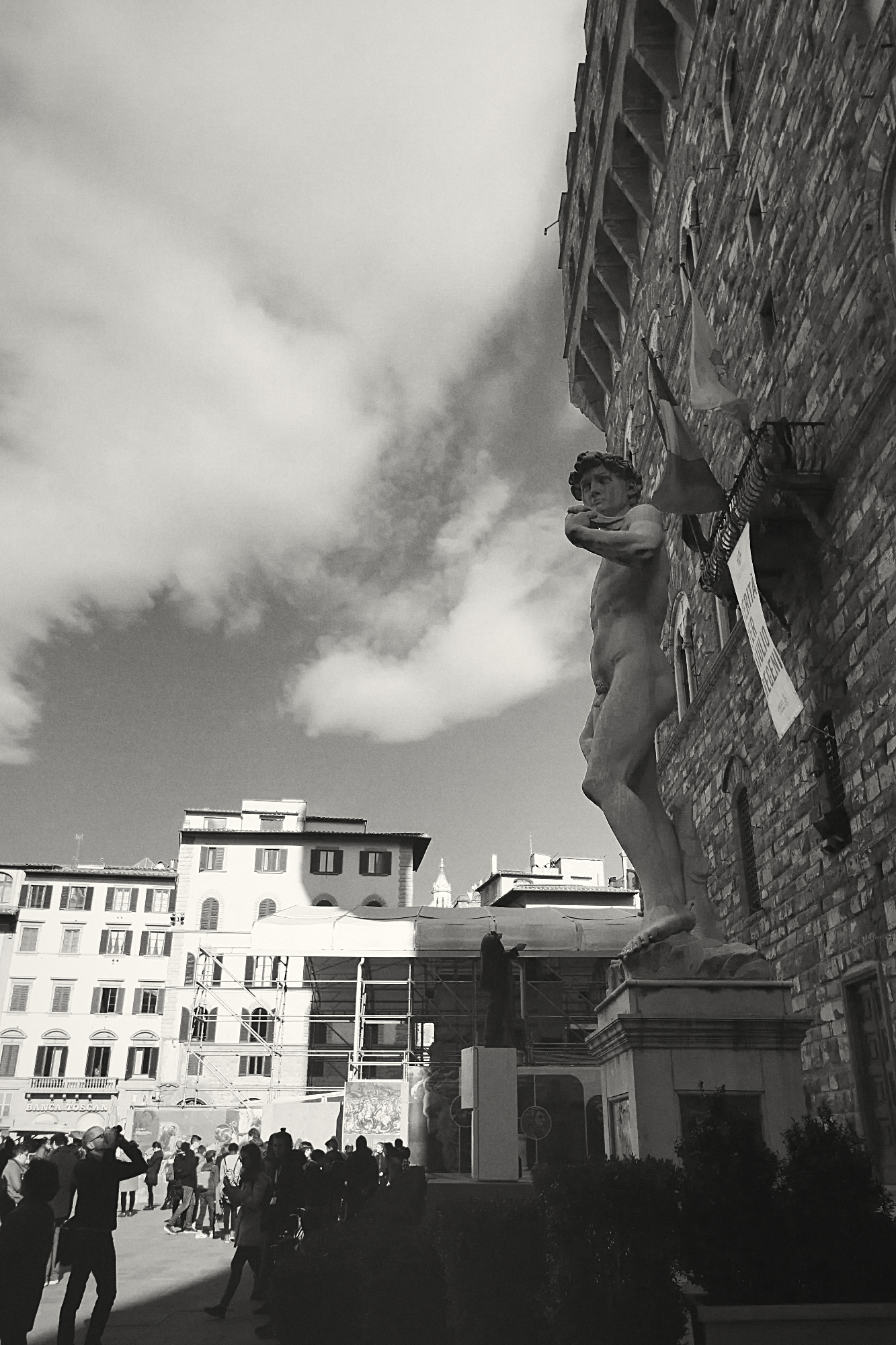
David, Florence
The copy of Michelangelo’s David that stands in Piazza della Signoria is never alone. Tourists, scaffolding, and the heavy stone of the Palazzo Vecchio all compete for attention. Shooting in black and white strips away the competing colors and leaves the statue’s gesture clean against the sky.
The key is height and angle. Get low enough that the figure rises above most of the heads, then wait for a brief gap in the crowd. The clouds help. They give the sky texture without competing with the marble. A color version of this scene would have been busier; the monochrome version lets the posture do the talking.
Maison Dagourette, Bayonne
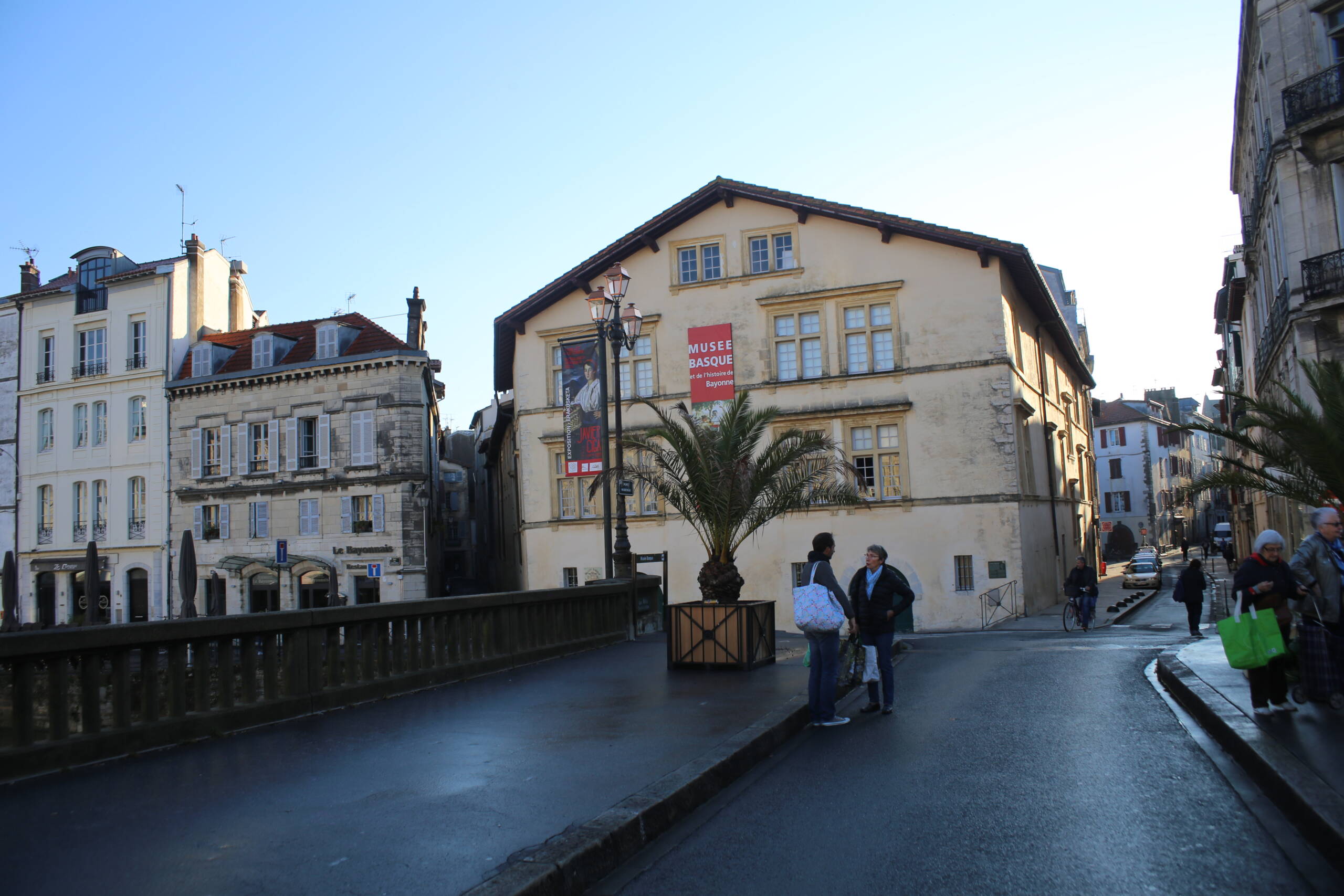
Winter light in Bayonne is low and directional. The Musée Basque sits on the far side of the Nive, and the bridge gives you a clean vantage point. Early morning leaves the street wet and mostly empty. Two people standing near the entrance become the only human scale in an otherwise architectural frame.
The building itself is simple: pale stone, dark shutters, a red museum banner. The palm tree and the streetlamps break the geometry just enough. Expose for the sunlit facade and let the bridge and the near side of the river fall into shadow. That contrast keeps the eye moving across the picture.
Photographers on the Beach
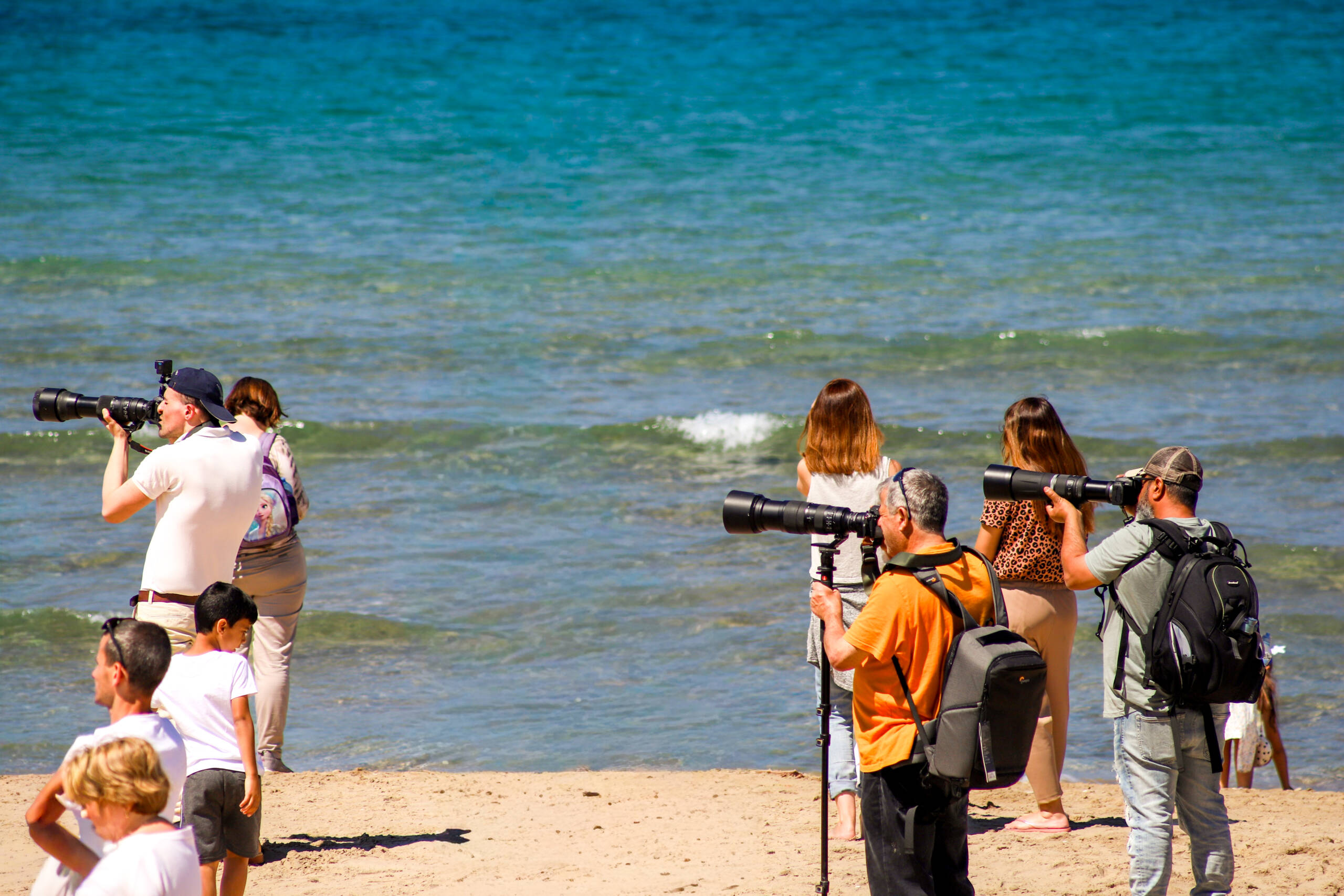
A line of long lenses pointed at the same stretch of water is its own subject. The photographers become the story. Their posture, the identical black backpacks, the way they lean into the glass all read as a temporary community.
The sea behind them is almost abstract — flat turquoise with a single white line of foam. Keeping the horizon high and the sand low gives the group room. Shoot from slightly behind and to one side so their backs form a rhythm. The light is hard, but the color of the water carries the frame.
A Woman with Binoculars
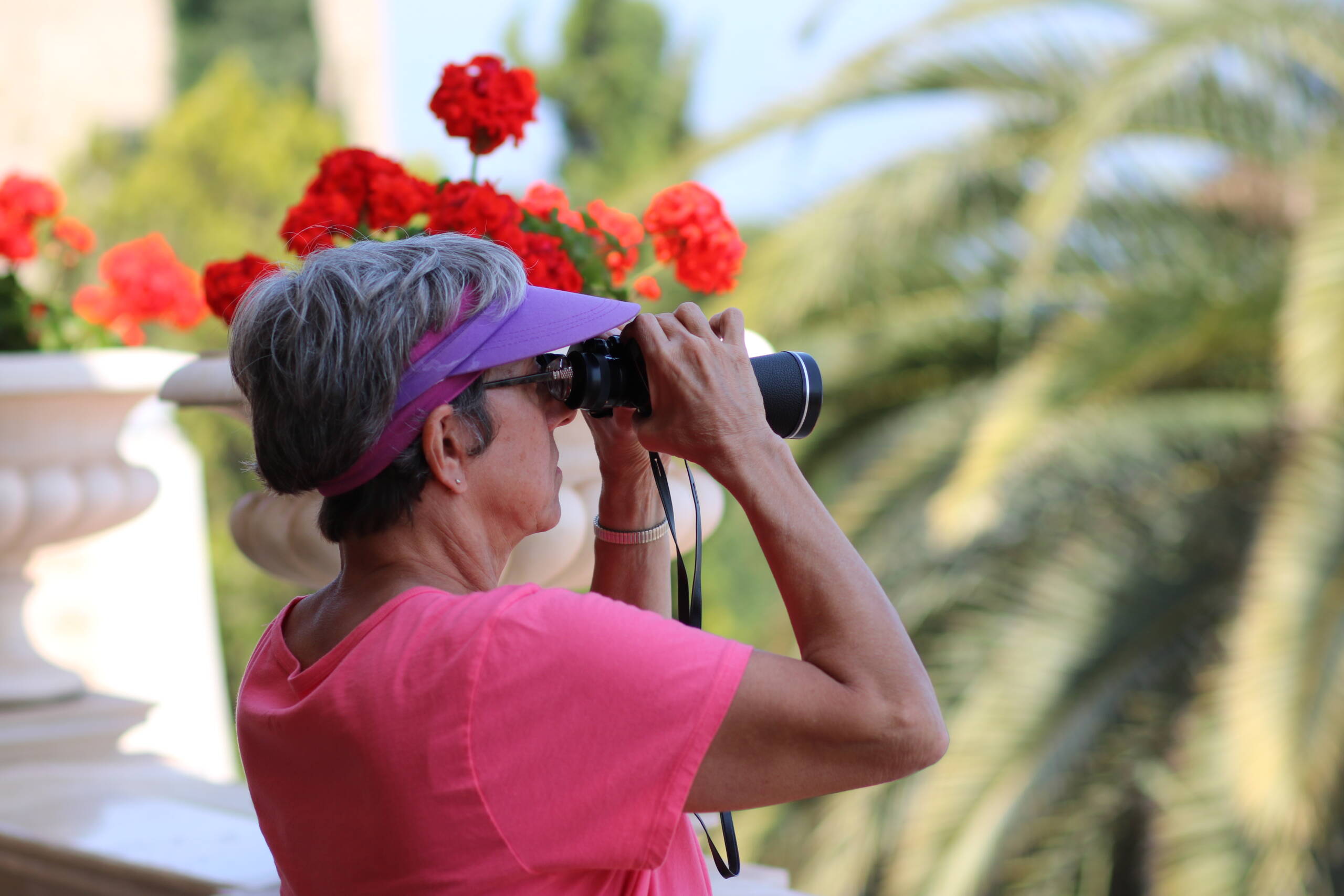
Sometimes the subject is the act of looking. A woman in a pink shirt and purple visor raises binoculars toward something out of frame. Red geraniums and soft palm fronds fill the background. The picture is quiet and specific.
The technique is simple: shallow depth of field, focus on the hands and the instrument, and a background that stays legible but soft. The bright flowers give the eye a place to rest without pulling attention away from the gesture. Waiting for her to settle into the stance is more important than the exact aperture.
Shopping Mall Entrance, New York
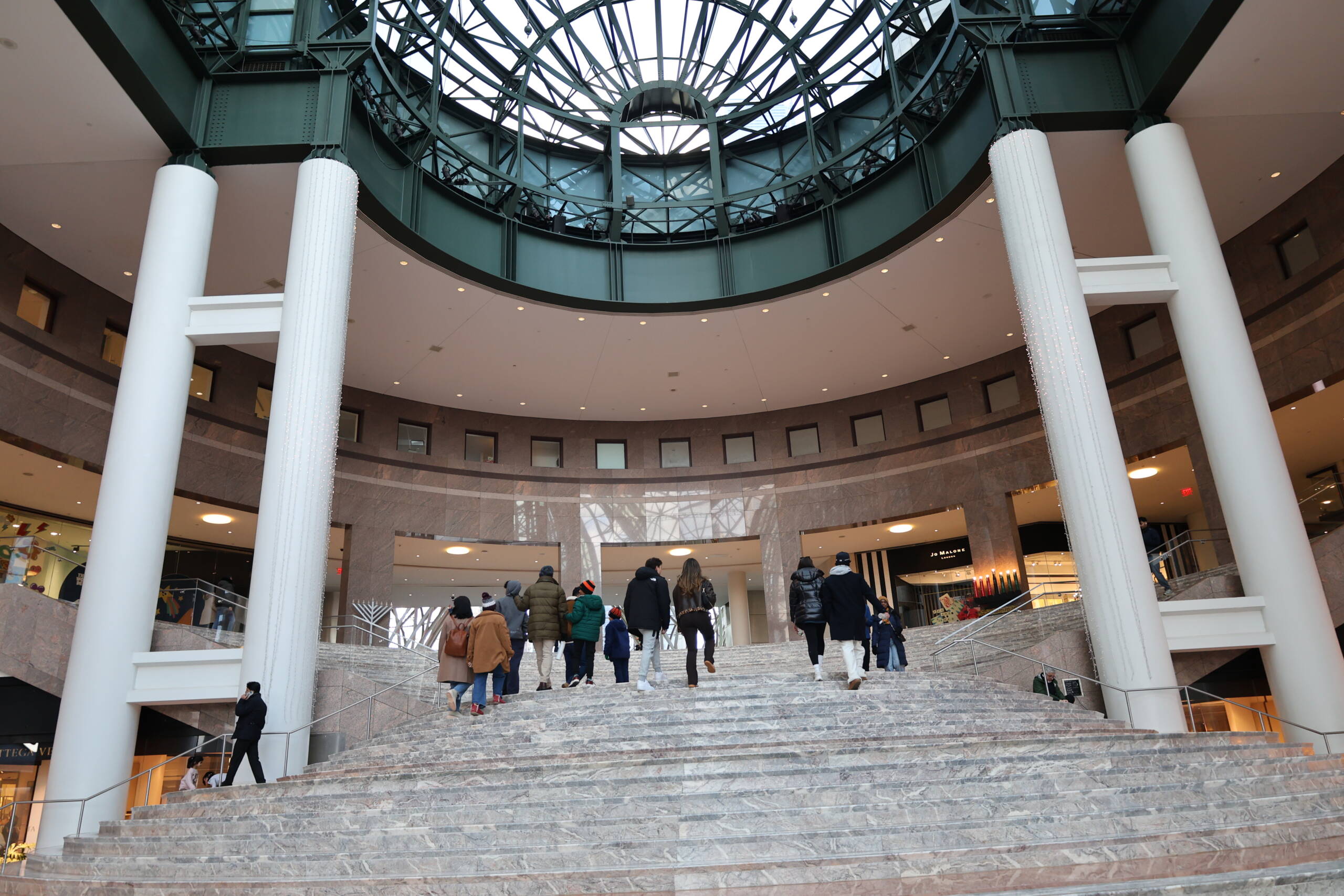
Large public interiors are full of people who are not looking at the camera. The wide staircase under a glass dome turns ordinary foot traffic into a procession. Marble, white columns, and the radial structure of the ceiling do most of the compositional work.
Shoot from the bottom of the stairs so the figures climb toward the light. The dome becomes a natural frame. Keep the exposure balanced so the interior lights don’t blow out and the glass still shows sky. The people themselves are secondary; they give scale and movement to a space that would otherwise feel empty.
What Ties Them Together
None of these frames were made in isolation. Crowds, weather, other photographers, and the architecture of the place all left their mark. The common practice is the same: decide what matters, give it room, and let the rest of the scene support it rather than compete.