Photographing Through Obstacles: Museum Armor, Aquarium Glass, Vienna's Plankengasse, the Holy Sepulchre and Wrocław at Night
Most of the photos I like best weren’t taken in clean conditions. There’s almost always something between me and the subject: a pane of museum glass, a tank of water, a dark street, a church lit by a few oil lamps. These five pictures all have that problem in common, and each one got solved a slightly different way.
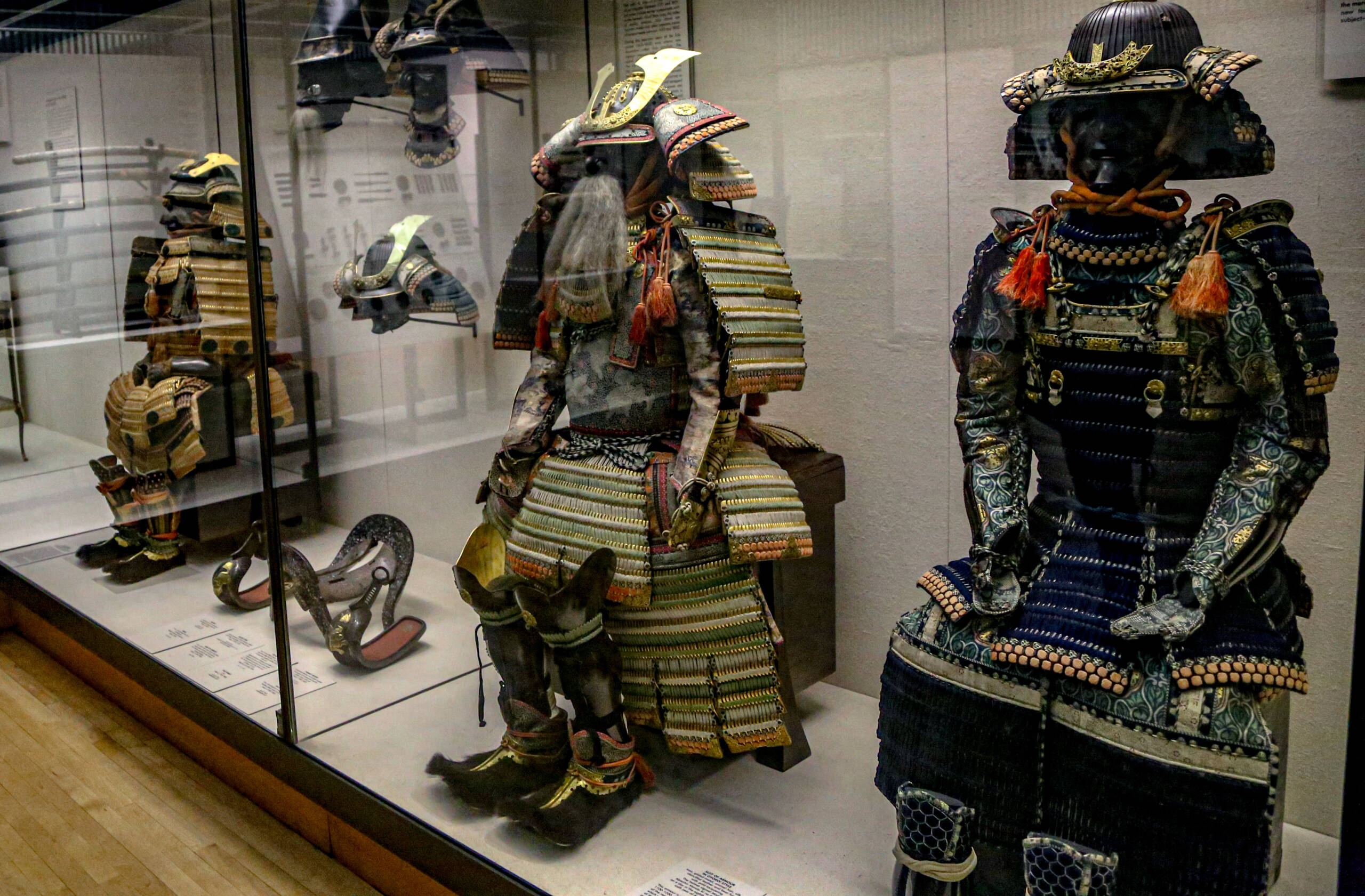
Armor Behind Museum Glass
Armor is a gift to photograph. Polished plate throws light back in long, clean highlights, and the shape reads instantly even in a small frame. The glass is the enemy. Stand back and you get the room, the ceiling lights and yourself reflected across the steel.
The fix is boring and it works. Get close, angle slightly off the perpendicular so the glare slides out of frame, and wear something dark. If the case allows it, put the lens hood right against the glass. A full suit like this one weighed somewhere around 15 to 25 kilos, spread across the whole body. You can feel that heft in a picture only if the highlights are clean, so the reflections have to go.
Plankengasse Toward Neuer Markt, Vienna
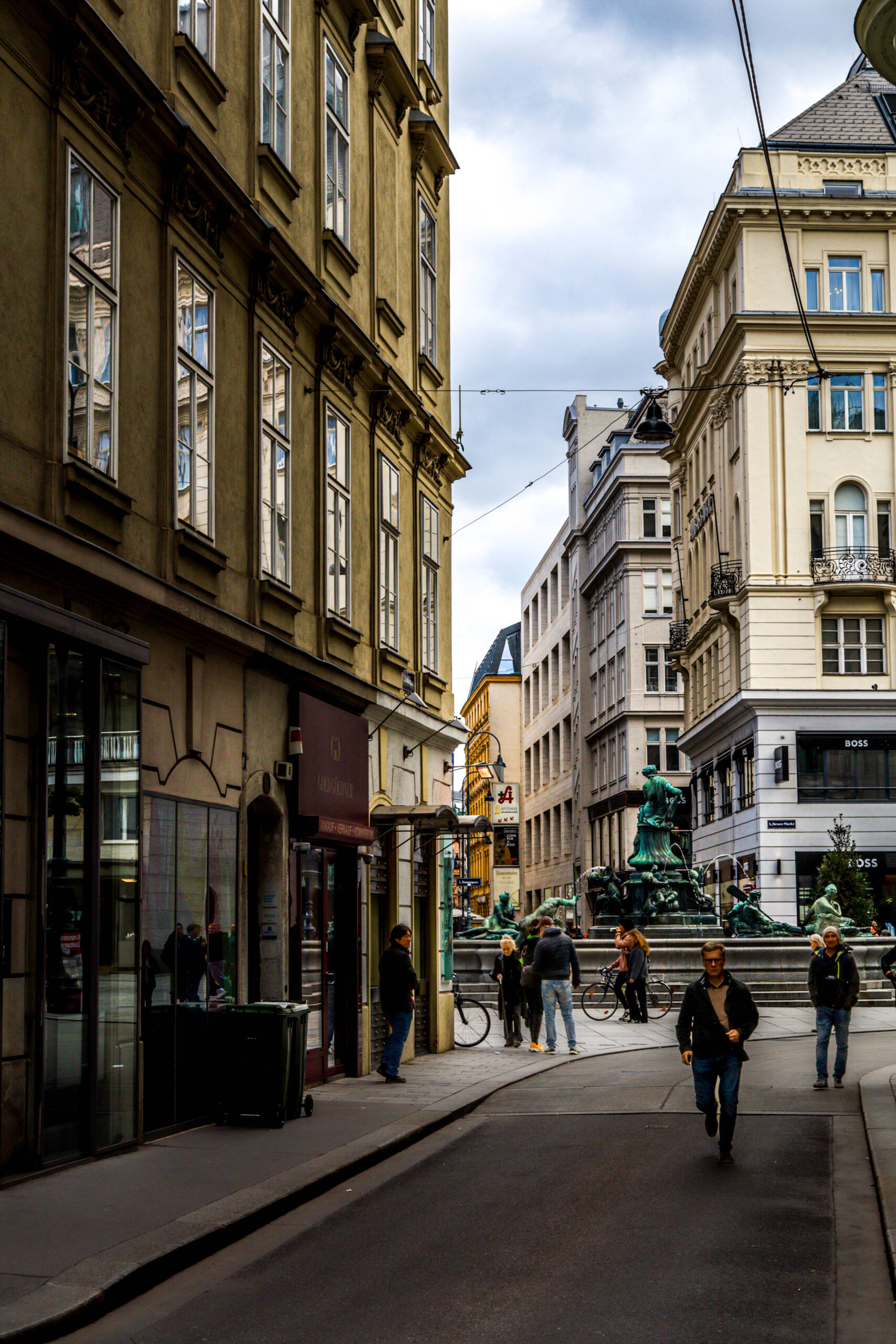
Here the obstacle is the street itself. Plankengasse is short and narrow, and its buildings throw the near end into shade while Neuer Markt at the far end sits in full sun. That contrast is the whole picture. The street works as a frame, and the Donnerbrunnen fountain in the square becomes the thing your eye travels to.
The fountain is by Georg Raphael Donner, from 1739. The figures you see today are bronze copies (the lead originals were moved indoors and are now in the Belvedere). Exposing for the bright square lets the walls fall darker, which is what you want. Expose for the walls and the square turns into a white blank.
Inside the Church of the Holy Sepulchre, Jerusalem
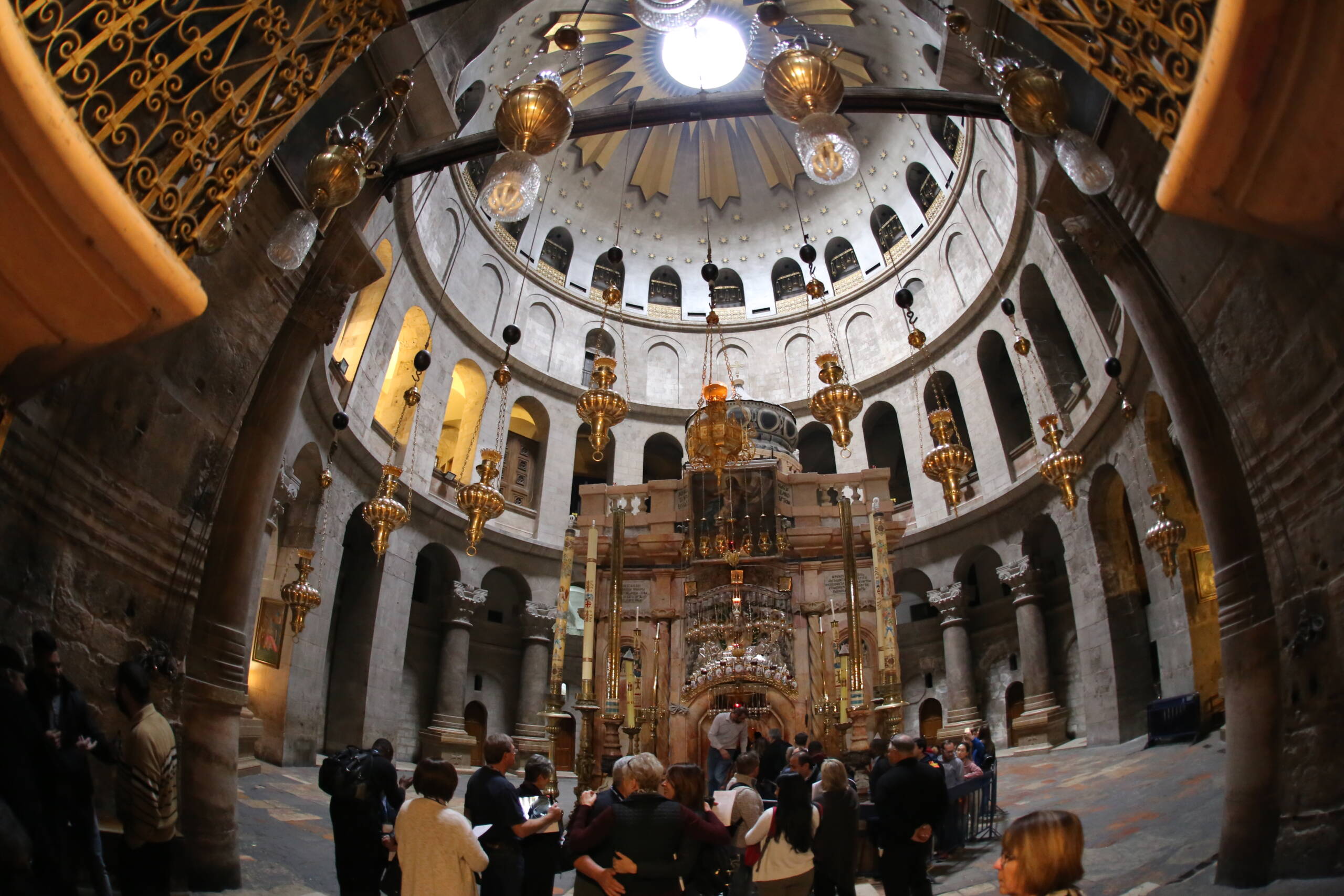
The Holy Sepulchre is dark, crowded and busy all day. The light comes from high windows and from hanging lamps, and several Christian denominations share the building under an arrangement that’s been fixed in place for centuries. Even the lamps belong to different communities.
For a photographer that means two obstacles at once: low light and people. I raise the ISO before I lower the shutter speed, because a sharp noisy frame beats a clean blurry one. Then I wait. Crowds move in waves here, and there are short gaps when a corner of the church is almost empty. The columns and lamps give you depth to work with. Shoot them in layers, near to far.
Wrocław Old Town Hall at Night
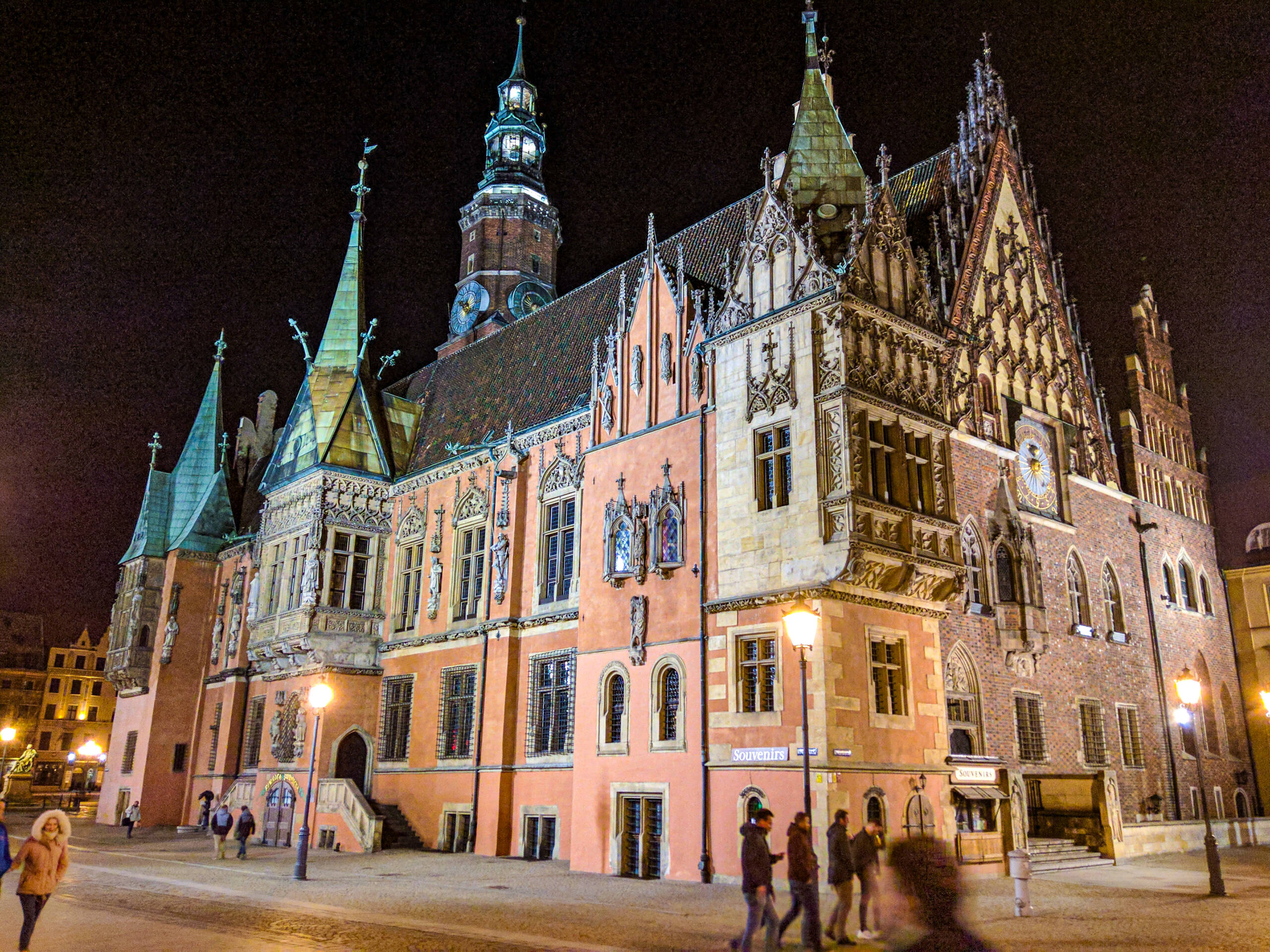
This one’s from a March evening in 2019, a bit after ten. Wrocław’s town hall was built and extended over roughly two and a half centuries, and the facade is packed with Gothic detail: pinnacles, gables, an astronomical clock. At night the floodlights pull all of it out of the dark.
Darkness is the easy obstacle, as long as the building is well lit. Meter for the facade, not the sky, and let the sky go black. The risk is the lights themselves. Warm floodlights can push the stone too orange, so I pull the white balance back a little in editing rather than trust the camera’s guess.
A Spotted Fish in an Aquarium
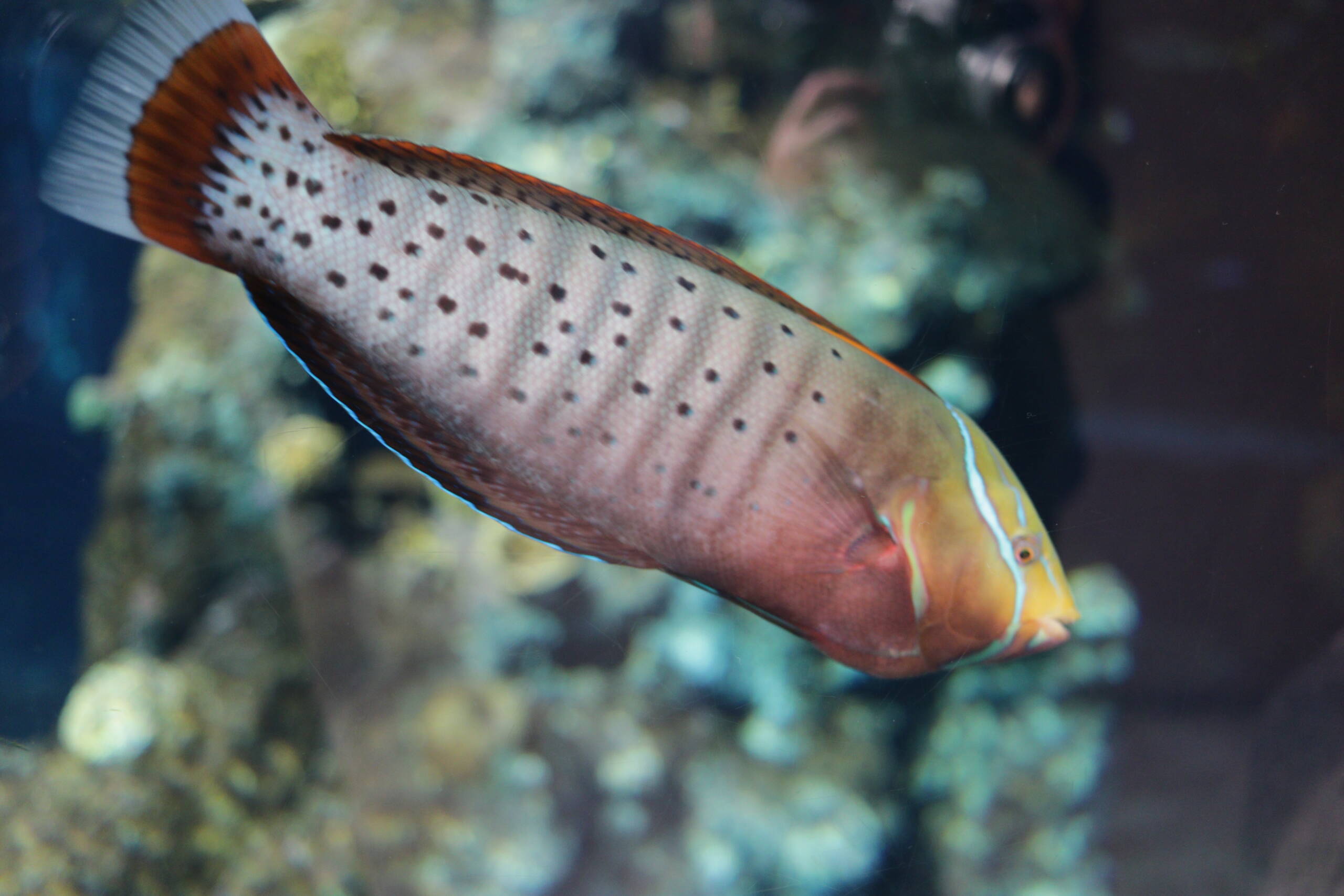
An aquarium stacks three problems. There’s the front glass, then water that softens everything, then a subject that won’t hold still. Flash off, always, or it bounces straight back off the glass. Lens close to the pane, same as with the armor.
Then just wait for the fish to come to you. When it swims near the glass and side-on, the water between you is thin and the spots come out sharp. Nothing else in the frame needs to happen. The pattern does all the work.
The Common Thread
Every one of these could’ve been a bad photo. The glass, the shade, the crowd, the dark and the water were all there first. Most of the job was getting close, choosing what to expose for, and waiting a bit longer than felt comfortable.